
The neurological systems of the kinetic chain include the central and peripheral nervous systems. The central nervous system is comprised of the brain and spinal cord. The peripheral nervous system is made up of a network of nerves running throughout the body that branch off the spinal cord. These systems function on the basis of a phenomenon known as neurotransmitter expression.
Neurotransmitter Expression
Nerves are organized end-on-end in a male-to-female arrangement. The male end of the nerve is called an axon. The female end is called a dendrite.
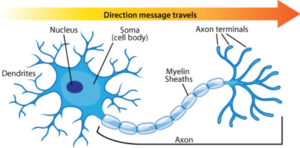
Nerves are arranged axon to dendrite in chains with breaks between each nerve. The space between the end of one nerve and the beginning of the other is called the synapse.
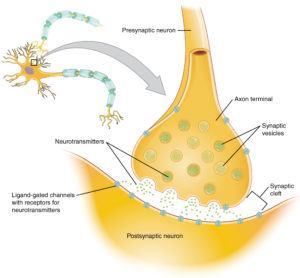
Brain chemical messengers called neurotransmitters bridge the gap across the synapse, and create one of two major signals in the nerve: excitatory or inhibitory. Excitatory neurotransmitters continue to carry the action potential to the next nerve, while inhibitory neurotransmitters stop the signal from being carried onward, thus stopping the action.
Neurotransmitters are Manufactured in the Gut
Some neurotransmitters are synthesized in the brain, but the majority of neurotransmitters are created in the gut (small intestine) by the metabolic processes of probiotic organisms – bacteria that live within the small intestine.